

People who experience both sagging around the jawline or neck and a loss of facial fullness may benefit from combining a face and neck lift with fat transfer. The two procedures address different aspects of facial ageing: lifting repositions loose tissues, while fat grafting restores volume to selected hollow areas.
This combination can create a more balanced approach to facial rejuvenation when both concerns are present. However, it is not suitable for everyone. Facial anatomy, general health, skin condition, healing capacity and personal expectations all influence whether combining the procedures is appropriate.
Who May Benefit From Combining a Face and Neck Lift With Fat Transfer?
Adults with both lower-face or neck laxity and noticeable facial volume loss may be suitable candidates. A lift addresses sagging tissues and contours, while fat transfer restores fullness in selected areas. The combination is worth discussing when both concerns are present and individual health and anatomy permit surgery.
Facial ageing does not always affect every area in the same way. Some people develop prominent jowls and loose skin beneath the chin, while their cheeks also become flatter or hollow. Others notice that their jawline has lost definition at the same time as the natural fullness of their midface has diminished.
These changes involve two distinct anatomical issues. Tissue laxity concerns the position and firmness of facial structures, whereas volume depletion concerns the loss or redistribution of underlying fat. Treating only one may leave the other visible.
For someone whose main concern is sagging around the jawline or loose neck skin, understanding the surgical approach is an important first step. A face and neck lift addresses these structural changes, while facial fat transfer may provide a complementary option when hollow areas also need attention. Each procedure has a distinct purpose, and their suitability should be assessed individually.
How the Lift and Fat Transfer Work Together
A combined approach brings together two procedures that address different features of facial ageing. Understanding their individual functions helps explain why they may be performed together.
A face and neck lift focuses on sagging tissues. Depending on the individual’s anatomy and surgical plan, the procedure can reposition underlying structures, address excess skin and improve the definition of the lower face, jawline and neck. It is particularly relevant when jowls or loose neck skin are prominent.
Facial fat transfer, also called autologous fat grafting, follows a different process. Fat is collected from a donor area of the patient’s body, processed and carefully injected into selected facial regions. The cheeks, temples and other hollow areas may be considered according to individual needs.
The facelift treatment goals described by the American Society of Plastic Surgeons distinguish sagging, jowls and loose neck skin from lost facial volume. This distinction is important because restoring volume and repositioning tissue are complementary objectives rather than interchangeable treatments.
The facial fat transfer procedure, as explained by the International Society of Aesthetic Plastic Surgery, involves harvesting, processing and reinjecting the patient’s own fat. Its purpose is to replenish selected areas, not mechanically tighten loose skin.
| Treatment | Main concern | Contribution |
|---|---|---|
| Face and neck lift | Sagging tissues, jowls and loose neck skin | Repositions tissues and improves lower-face and neck contours. |
| Facial fat transfer | Hollow cheeks and selected areas of lost volume | Restores volume using the patient’s own harvested fat. |
| Combined approach | Laxity and volume depletion occurring together | Addresses both concerns through complementary procedures. |
The decision to combine them should therefore follow an anatomical assessment rather than a desire to undergo more procedures. Someone with substantial tissue laxity but little volume depletion may not need fat grafting. Conversely, someone with hollow cheeks but firm facial tissues may not benefit from a surgical lift.
What Makes Someone a Suitable Candidate?
The balance between tissue laxity and facial volume loss helps determine which treatment options deserve consideration. When lower-face or neck sagging is the predominant concern and facial fullness remains relatively well preserved, a lift alone may be sufficient. When hollow cheeks or other depleted areas are the principal concern but facial tissues remain firm, fat transfer may be worth discussing without a lift. People who have both noticeable sagging and volume depletion may benefit from considering the combination, because each procedure addresses a different concern. These patterns guide the discussion rather than establish eligibility: a clinical examination is needed to determine which changes are present and which interventions could help.
However, these characteristics do not automatically establish eligibility. A surgeon must examine the distribution of facial fat, tissue laxity, skin condition and neck anatomy to determine whether the proposed procedures are likely to address the patient’s actual concerns.
General health is equally important. Medical conditions that affect healing, medication use, smoking habits and previous procedures can influence surgical planning. There must also be an appropriate donor area if fat transfer is being considered.
Expectations matter too. Someone seeking a complete reversal of ageing or a guaranteed permanent change may need a clearer discussion of what surgery can realistically achieve. The objective should be a proportionate improvement rather than an entirely different appearance.
- Is there visible laxity around the lower face or neck?
- Are there specific hollow areas where volume restoration may help?
- Is there sufficient suitable donor fat for the planned treatment?
- Does the medical history reveal healing or anaesthetic considerations?
- Have smoking and medication-related risks been discussed?
- Are the expected changes realistic and proportionate?
- Have recovery, follow-up and possible revision been explained?
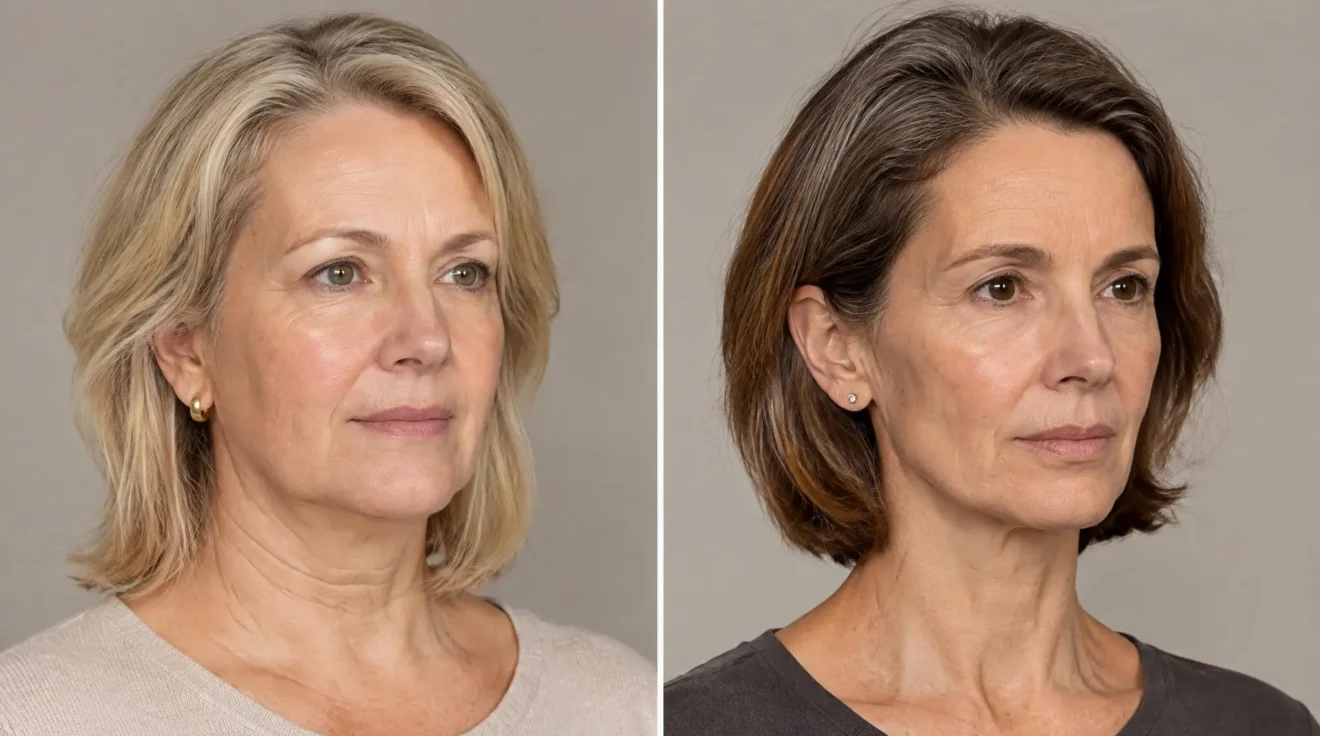
A useful consultation should distinguish what the patient sees from what a clinical examination establishes. Photographs may help discuss concerns, but they cannot independently determine tissue quality, donor-fat suitability or surgical risks.
What Does a Natural-Looking Result Depend On?
Natural-looking facial rejuvenation is not about maximising volume or making every contour appear completely smooth. It is about maintaining balanced proportions while addressing the specific changes that concern the patient.
For fat transfer, the placement and quantity of injected fat are important considerations. Restoring fullness to a hollow cheek, for example, should take account of the surrounding facial contours. Excessive filling can create disproportionate fullness rather than a balanced appearance.
Fat retention is another important consideration. Not all transferred fat necessarily survives after injection, and the retained volume varies between individuals and treatment areas. The eventual appearance cannot be judged solely from the immediate postoperative result, when swelling may still affect facial contours.
Similarly, the lifting component should be planned around the individual’s anatomy. The aim is to improve tissue position and contour without creating an unnecessarily tight or artificial appearance. Surgical technique, tissue characteristics and healing all influence the outcome.
Natural-looking does not mean maximum volume. The aim is to restore balance while respecting individual facial proportions. Some transferred fat may be reabsorbed, and the amount retained varies. A surgeon should explain realistic outcomes and whether further treatment could be considered.
The combination may therefore be attractive to people who want to address both hollowing and sagging, but it cannot guarantee symmetry, permanence or a particular degree of rejuvenation. A carefully individualised plan is more important than the number of procedures performed.

Risks, Limitations and Recovery Considerations
Combining procedures also means considering the risks associated with each one. A face and neck lift is surgery and may involve bruising, swelling, temporary numbness, discomfort, scarring and stiffness. More significant complications can include bleeding, infection, nerve injury, asymmetry and problems with wound healing.
Fat transfer has its own potential complications. These include infection, irregular contours, asymmetry, undercorrection and overcorrection. Some of the transferred fat may be reabsorbed, meaning the final volume can differ from the initial postoperative appearance.
The NHS overview of facelift risks and complications describes possible side effects and surgical complications, including swelling, numbness, infection and nerve injury. These risks should be discussed in the context of the individual’s procedure and medical history.
Recovery involves several aspects that may progress differently. Following a face and neck lift, patients may experience facial swelling, bruising, temporary numbness and discomfort as the tissues heal. Incisions also require appropriate postoperative care. When fat transfer is added, swelling can affect the treated areas, and the appearance of the restored contours may continue to change as healing progresses and some transferred fat is reabsorbed. The early postoperative appearance therefore does not establish the eventual volume or contour.
The extent of surgery and individual healing characteristics determine the recovery arrangements. Restrictions on physical activity, the timing of a return to normal occupations and follow-up appointments should be discussed with the surgeon before treatment. Patients should also understand which postoperative changes are expected and which signs require prompt medical attention. Recovery instructions must reflect the procedures actually performed rather than a universal timetable.
This article is for general educational purposes and cannot determine whether combined surgery is appropriate for an individual. A qualified surgeon must assess medical history, anatomy, treatment options and individual risks before any decision.
Questions to Discuss Before Choosing the Combination
A consultation should establish whether both procedures are genuinely needed and what each is expected to contribute. Useful questions include:
- What additional improvement might fat transfer provide beyond lifting alone, and which facial areas would be treated?
- Would performing both procedures together offer a meaningful benefit for my anatomy, or would one procedure be sufficient?
- Could the procedures be performed separately, and how would that affect treatment planning and recovery?
- If some transferred fat is reabsorbed or the restored volume is insufficient, what options could be considered?
- How would recovery arrangements, follow-up appointments and possible revision differ between the combined and separate approaches?
It is also reasonable to ask how the proposed treatment plan accounts for facial proportions and the possibility of additional treatment. Clear answers help distinguish a realistic surgical objective from an expectation that cannot be guaranteed.